
Blog > Suncast Batavia Electric Credit: What We Know So Far
Suncast Batavia Electric Credit: What We Know So Far
A proposed break on Suncast’s electric bill raises a fair question: why might that matter to yours? Here’s the proposed deal and the city staff’s reasoning, with the next steps still to come.
Information reviewed: October 20, 2026. Proposal discussed October 13.
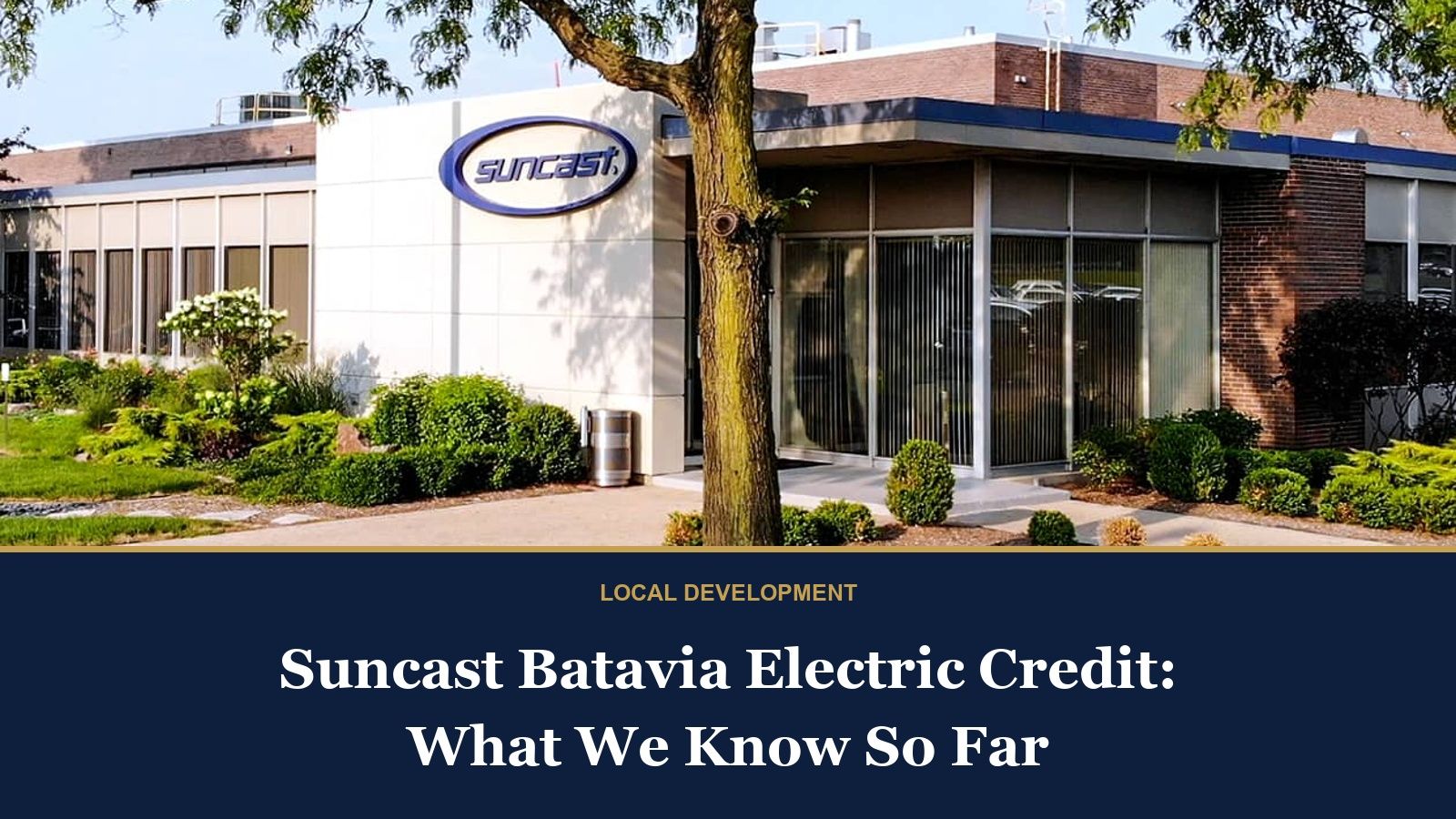
Company building photo: Suncast. Used as company context, not a picture of new expansion construction.
The October 13 proposal would offer $125,000 a year in electric-bill credits for ten years. Keeping manufacturing in Batavia and meeting electricity-use goals are central conditions. Staff connects the deal to jobs, utility revenue and spreading fixed power costs across more sales.
What is Batavia proposing for Suncast?
If you’re paying your full electric bill, a proposed credit for a major business can make you stop and ask a few questions. What does the company get? What does the city get? And how does it connect to everyone else using Batavia’s electric utility?
The city’s October 13 discussion memo describes a proposed ten-year Economic Development Expansion Agreement with Suncast. The structure would provide $125,000 a year in electric-bill credits, totaling up to $1.25 million over the term.
The credit would appear on Suncast’s monthly electric bill rather than as a separate cash payment. Each year’s credit would depend on the company keeping substantial manufacturing operations in Batavia and meeting electricity-use goals. Utility and finance staff would confirm the conditions as the credit is applied.
Those details matter. The memo describes an incentive tied to a commitment and ongoing requirements. Its next steps call for staff to finalize an agreement for council approval, so this article stays with what that discussion document establishes.
Why is keeping Suncast in Batavia part of the discussion?
The memo identifies Suncast as Batavia’s largest employer and the electric utility’s largest customer. It describes approximately 1,000 existing local jobs and a planned expansion that could add about 200 positions.
Suncast makes outdoor products such as sheds, hose reels and storage products. The memo says the company occupies two facilities in Batavia’s industrial park and has operated locally for more than 40 years. Its expansion planning, described as beginning in 2027, could place new capacity in Batavia or out of state.
That is why the proposal combines job retention with growth. The city is looking at keeping an existing employer here while giving its expansion another reason to stay local. The additional 200 jobs are a projected result, not a count of positions already delivered.
What happens to the city’s power costs if a major customer leaves?
This is the question behind the reel’s rehook. If Batavia loses a major electricity customer, does the city’s own power bill fall by the same amount? The memo says much of the utility’s cost does not change with the amount of power sold.
In particular, it describes a long-term take-or-pay power-supply contract. Batavia must pay for its contracted share whether or not its customers use that electricity. Losing a customer therefore does not automatically remove the power costs that customer’s bill was helping cover.
Staff’s argument is that retaining Suncast’s electricity use, and adding demand from an expansion, spreads those fixed obligations across a larger base of sales. The memo says Suncast accounts for about 14 percent of the utility’s revenue, which helps explain why this particular customer is part of a broader rate-stability discussion.
That is the city staff’s reasoning behind the proposed deal. It gives residents a concrete way to weigh the incentive: the amount of the credit, the commitment in return, and the utility revenue the city expects to retain and grow.
Keeping an eye on Batavia?
Local employers and development are part of understanding an area. If you’re also thinking about a move, here’s a place to start with the housing side.
View your local market snapshotOr call Brian at 630-465-7413.
Does the proposal mean your electric bill will go down?
The memo describes the agreement as supporting rate stability and says it does not change the utility’s rate schedule. It does not give an individual household a promised reduction in its monthly bill.
Keeping that distinction clear makes the conversation more useful. You can ask whether the conditions are strong enough, how the annual checks would work, and what terms appear in a final agreement. You can also weigh the expected job and revenue benefits against the credits the city would be committing.
For this update, the documented starting point is the October 13 proposal. I’m not treating that discussion memo as proof that a later final agreement has already been adopted.
Questions I Get Asked a Lot
What electric-bill credit is Batavia considering for Suncast?
The structure discussed in the city’s October 13, 2026 memo would provide Suncast with $125,000 a year in electric-bill credits over ten years, totaling up to $1.25 million. The memo describes credits on the company’s monthly electric bill, with annual conditions and true-ups, rather than a separate cash payment.
What would Suncast have to do to earn the credits?
According to the October 13 proposal, Suncast would need to keep substantial manufacturing operations in Batavia and meet specified electricity-use goals. Utility and finance staff would verify the conditions as the annual credit is applied. The memo frames the arrangement around a ten-year commitment to remain in Batavia.
How many jobs could Suncast’s expansion add in Batavia?
The city’s October 13 memo says Suncast has approximately 1,000 existing Batavia jobs and that its planned expansion could add about 200 positions. Those additional positions are an expected outcome of the planned expansion, not a report that 200 jobs have already been created. The memo describes expansion planning beginning in 2027.
Why does Suncast’s electricity use matter to other customers?
The city memo says much of the utility’s cost stays fixed even when electricity sales change. It describes a long-term take-or-pay power contract that requires Batavia to pay for its contracted share whether customers use the power or not. Staff says retaining Suncast’s load and adding expansion-related sales spreads those obligations across a larger base of sales.
Has the Suncast agreement been finalized, and would my electric bill go down?
The source reviewed for this article is the October 13 discussion memo, which calls for staff to finalize an agreement for council approval. This update does not establish a later final agreement. The memo describes a rate-stability rationale for the proposal, rather than a guarantee that an individual resident’s electric bill will decrease.
This developing-story update is based on the October 13, 2026 city discussion memo, reviewed October 20. Proposed terms, projected jobs and future steps are not completed outcomes. A later final agreement is not established in this update, and individual utility-bill savings are not guaranteed.
Stay tuned for what comes next.
We’ll see what terms come forward and what the next city updates establish. Is this a smart investment in keeping jobs and utility revenue here, or a break businesses should fund themselves? What would you want answered about the proposal?
More local updatesYour local market snapshotCall 630-465-7413Primary source: City of Batavia, October 13, 2026 discussion memo on an Economic Development Expansion Agreement with Suncast Corporation. Company photo source: Suncast.