

Blog > Batavia Data Center: Who Pays for the $18M in Upgrades?
Batavia Data Center: Who Pays for the $18M in Upgrades?
The developer pays first. What happens after that depends on conditions. Here’s what we know so far about Hut 8’s planned project on Hubbard Avenue.
Information reviewed: October 20, 2026
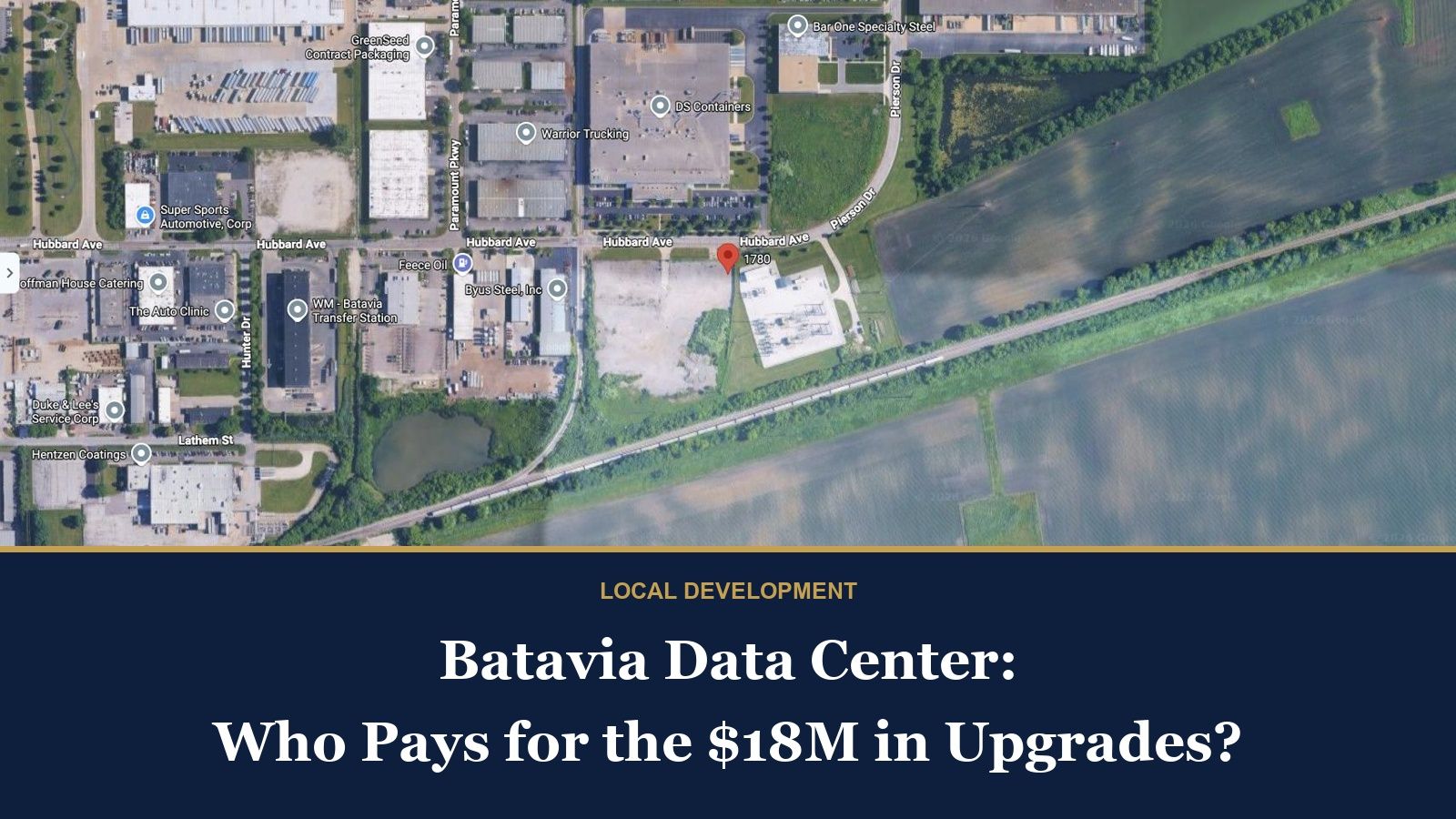
Actual satellite view of the address area. The marker is not a parcel boundary. Google Maps; imagery ©2026 Airbus, Maxar Technologies, Vexcel Imaging US, Inc.; map data ©2026 Google.
Who is actually paying that electrical-upgrade bill?
About $18 million in electrical work is a big number. If you live in Batavia and pay an electric bill, it’s reasonable to ask where that money comes from and whether the project changes anything for you.
According to the City of Batavia’s project update, the developer must provide the funds in advance. The planned Hut 8 data center needs approximately $18 million in off-site electrical improvements, including new transformers, wires and safety equipment. The city will own that infrastructure.
That answers who puts up the money first. It leaves another question: could the developer get some of that money back later? The city says eligible costs can be reimbursed under specific conditions. Understanding those conditions is the part worth slowing down for.
Where is the project, and what stage is it in?
The planned data center is at 1780 Hubbard Avenue, east of Kirk Road in Batavia’s northeast industrial area. The city identifies the developer as Batavia DC Corp, a wholly owned subsidiary of Hut 8 Corporation.
The city’s update says zoning and utility-service approvals are complete. The building’s design is still under review, with building permits and construction ahead. Those are different milestones, so an approved utility agreement should not be read as a statement that the facility has opened.
The city describes an approximately 120,000-square-foot facility, expected to begin with about 20 megawatts of electric demand and permitted to expand to a maximum of 50 megawatts under the agreements. Those figures describe the planned project, rather than a report that the full demand is already operating.
I don’t have a confirmed construction start date or an opening day to share from the information reviewed for this update. For now, design review and the remaining permits are the practical next steps to watch.
What would it take for the developer to get paid back?
The city says eligible costs would be reimbursed over several years if the facility reaches specified electricity-consumption levels. The reimbursements would be funded with revenue generated by the project. Its FAQ directs readers to section 4.8 of the Master Services Agreement for the funding arrangement.
That gives us three useful points to keep together: the developer advances the funds, the facility must meet the stated electricity-use requirements, and reimbursement uses revenue the project generates. Leaving one of those out can make the arrangement sound much simpler than the city describes it.
It also matters that the city refers to eligible costs. This update should not be treated as a promise that every dollar the developer spends will automatically be repaid. The city’s explanation describes a reimbursement mechanism with conditions, not an unconditional check for every project expense.
So when someone asks, “Who pays?” there are really two parts to the answer. Who provides the money before the improvements are built? The developer. Could eligible costs later be reimbursed? According to the city, yes, if the requirements are met and using project-generated revenue.
Following what’s changing around Batavia?
Local development is one piece of getting to know an area. If you’re also thinking about a move, you can check the housing side of the picture.
View your local market snapshotOr call Brian at 630-465-7413.
What does this tell us about residents’ bills?
The funding structure tells us who provides the upfront money and how eligible reimbursement is supposed to work. It does not establish that your own electric bill will go down. I’m not making that promise.
There are still useful questions residents can ask as the project moves forward: what comes out of design review, when permits are issued, and when a construction timeline becomes available. For the reimbursement details, the city’s FAQ and the agreement it links are better starting points than a headline on its own.
This is a developing local story. We can explain the information available now and keep watching the next steps without pretending that every outcome is settled.
Questions I Get Asked a Lot
Where is the planned Hut 8 data center in Batavia?
The project is at 1780 Hubbard Avenue in Batavia’s northeast industrial area, east of Kirk Road. The city identifies the developer as Batavia DC Corp, a wholly owned subsidiary of Hut 8 Corporation. The satellite image in this article shows the address area, not a new parcel survey or an official building rendering.
Who pays for the Batavia data center’s electrical upgrades upfront?
The city says the developer must provide the funds in advance. Approximately $18 million in off-site electrical improvements are expected to be needed for the project, including transformers, wires and safety equipment. The city will own that infrastructure. Upfront funding is separate from the conditional reimbursement arrangement described in the city’s update.
Can the developer be reimbursed for the electrical upgrades?
According to the city, eligible costs would be reimbursed over several years if the facility reaches specified electricity-consumption levels. Those reimbursements would use revenue generated by the project. This is conditional reimbursement, rather than an automatic promise to repay every project expense. The city’s FAQ points readers to section 4.8 of the Master Services Agreement.
Has construction started on the Batavia Hut 8 project?
The city update reviewed October 20, 2026 says zoning and utility-service approvals are complete and design review is underway. Building permits and construction are still ahead in that update. This article does not establish a construction start date or an opening day. Check the city’s project page for newer milestones before making plans around a timeline.
Does this mean Batavia residents’ electric bills will go down?
This update does not establish a reduction in residents’ electric bills. The city describes developer-funded upfront improvements and reimbursement for eligible costs using project-generated revenue if electricity-use requirements are met. That funding structure does not, by itself, tell an individual customer what their future bill will be.
This update reflects the city’s project information reviewed October 20, 2026. Project stage and timing can change. The city summary was reviewed; this article is not an independent legal interpretation of the full executed agreement. No construction start, opening date or individual utility-bill reduction is established here.
Stay tuned as the project moves forward.
We’ll see what comes next in design review, permitting and the construction timeline. Would you support this funding approach for Batavia? What would you want answered before construction begins?
More local updatesYour local market snapshotCall 630-465-7413Primary source: City of Batavia, Batavia Data Center Project (Hut 8), including the city’s project-stage and electrical-infrastructure reimbursement explanations. The FAQ links the Master Services Agreement. Source reviewed October 20, 2026.