

Blog > How to Know When You've Outgrown Your Current Home
How to Know When You've Outgrown Your Current Home
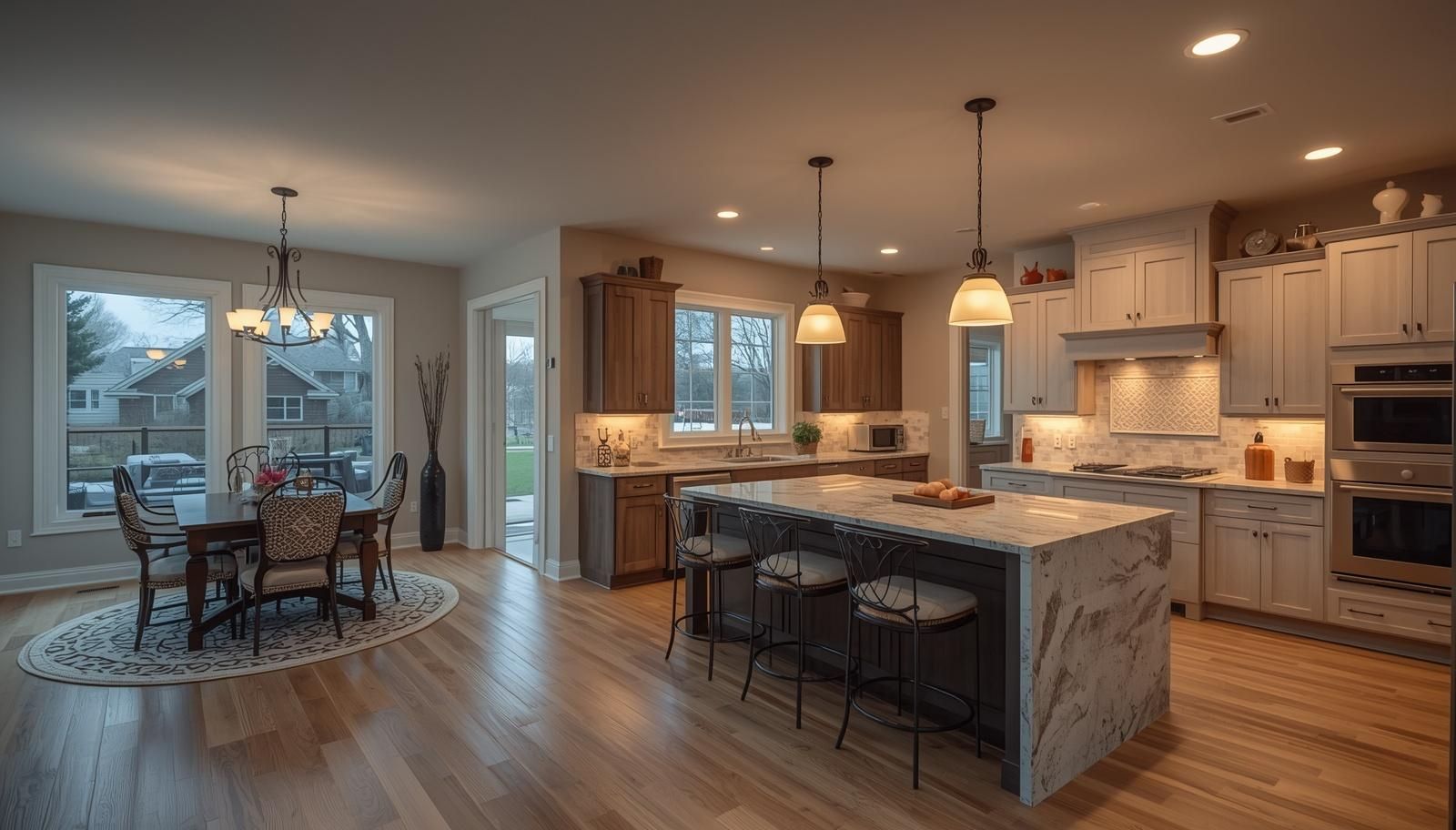
There's a specific kind of frustration that move-up buyers know well. It's not dramatic. Nobody's sleeping in the garage. The house technically works. But something's off — a slow, building awareness that you've grown past the space you're in, and the home that used to fit your life doesn't anymore.
If that sounds familiar, here's how to tell whether you've genuinely outgrown your home or just need a good weekend to reorganize.
The Closets Are the First Symptom, Not the Problem
When people tell me their house feels too small, the first thing I ask about is storage. Not because storage is the real issue — but because it's usually the canary in the coal mine. When closets are packed, when the garage has turned into overflow storage, when you're renting a unit offsite just to keep things functioning... that's not a clutter problem. That's a space problem.
A lot of homes in Batavia and Geneva were built for families of a particular size with a particular lifestyle. If yours has shifted — more kids, more people working from home, more gear for sports or hobbies or aging parents who need a room — the house hasn't kept up. No amount of reorganizing fixes a mismatch that structural.
Count Your Workarounds
Here's a quick mental exercise. How many workarounds does your household run every single week? The kids share a room and you've built a whole staggered-bedtime system around it. You and your partner trade the dining room table back and forth for home office time. The dog crate lives in the hallway because there's genuinely nowhere else for it.
Every workaround is a small tax on your energy. One or two is normal. Five or six is a sign.
Move-up buyers I work with across the Fox River Valley — from North Aurora up through St. Charles — almost always describe the same thing when they finally decide to make a move: they got tired of managing the workarounds. Not tired of the house itself. Tired of the mental load of making it fit their life every single day.
Your Space Doesn't Reflect Where You Are Anymore
This one people don't say out loud very often, but it's real. You've had a solid few years. Your income is up. Your life looks different than it did when you bought your first home. But you're still in a house that reflects where you were — not where you are.
That gap chips away quietly. You host less because the layout doesn't invite it. There's no real home office, just a corner of the bedroom with the door closed. The kids can't have friends over without it becoming a whole production.
Moving up isn't about status. It's about function. And if your home is constraining your daily life in ways your income doesn't require anymore, that's worth an honest conversation. Give me a call at 630-465-7413 and we can talk through what a move would actually look like — numbers, timing, and what the process feels like for families in your exact position.
You've Stopped Picturing Your Future Here
This one is subtle. But when people stop imagining their next chapter in a house — when "five years from now" no longer includes the home they're standing in — that's a clear signal.
Maybe you've noticed the newer builds going up near Sugar Grove. Maybe you've driven a street in Geneva and thought, "someday." Maybe you've pulled up a listing in Yorkville just to see what was out there and found yourself doing the math. If you're spending mental energy imagining a different home, that energy is telling you something worth listening to.
The Numbers Might Surprise You
A lot of move-up buyers put off the conversation because they assume the financial side will be painful. The new mortgage will be brutal. The down payment will drain their savings. The timing will never feel right.
Sometimes those concerns are real. But the equity people have built in the Fox River Valley over the past five to ten years often makes the move more manageable than they expect. The real starting point isn't the houses you're looking at — it's knowing what your current home is worth right now. You can get a free estimate at hochstetterhomes.com/evaluation. That one number changes the whole conversation.
Questions I Get Asked a Lot
Should I renovate instead of moving?
It depends on what's actually driving the problem. If it's a layout issue — you need more bedrooms, a real office, a bigger kitchen — renovation can sometimes fix that. But if you need a different neighborhood, better schools, or more land, no remodel gets you there. I'm happy to talk through both options honestly before you decide anything.
My current home needs work before I sell. Is that a problem?
Most homes do. The question is which improvements actually move the needle on your sale price versus which ones are just money spent. I can walk through your home and give you a straight read on what's worth doing. Most sellers are relieved — it's usually less than they assumed.
Do I have to sell before I can buy?
Not necessarily. It depends on your financial situation and how much you want to carry two properties at once. Some move-up buyers use contingent offers. Others use bridge financing. There are a few ways to structure it, and I'll walk you through each one so you can choose what fits.
How long does a move-up purchase take from start to finish?
From first conversation to keys in hand, most move-up buyers are looking at three to five months — sometimes a bit longer depending on how specific your criteria are. It's not as fast as people hope or as slow as they fear. We'd build a realistic timeline together from day one.
If any of this sounds like your situation, let's talk. Start by finding out what your current home is worth — get a free estimate at hochstetterhomes.com/evaluation. Or call me directly at 630-465-7413. I'm Brian Hochstetter with Hochstetter Homes and eXp Realty, and helping move-up buyers across the Fox River Valley make this transition — without the stress and second-guessing — is exactly what I do.